ReferenceInternational Business Law
Evidence gathering in the USA for international arbitration
The discovery process is essential in the United States for preparing litigation. Also in international arbitration?
Background
The discovery process is a key instrument in US procedural law for preparing a trial.
It allows each party to systematically obtain evidence and information from the other party to strengthen their own argument or uncover weaknesses in the opposing party’s argument. This is done through, among other things, depositions, requests for document production, requests for admissions, and witness testimonies. Subpoenas can also be used to obtain evidence from non-parties.
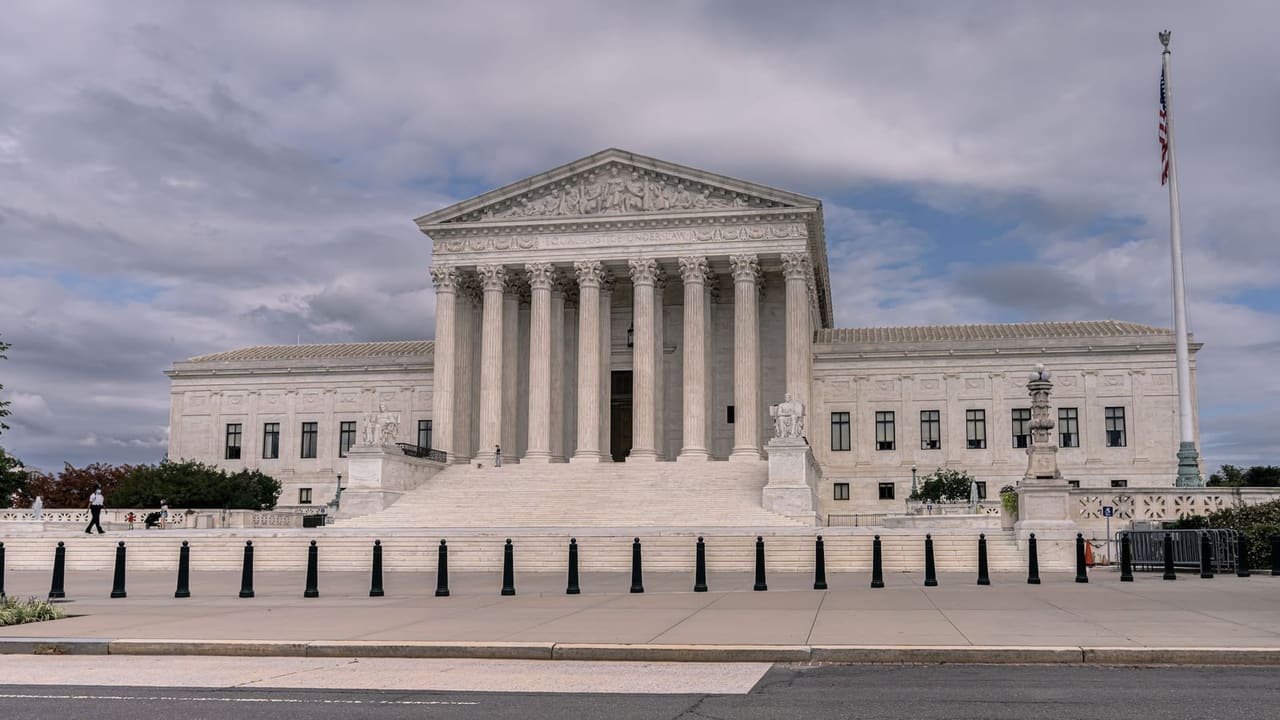
On 13 June 2022, the US Supreme Court decided in the case ZF Automotive US, Inc., et al. v. Luxshare, Ltd., 596 U.S. 619 (2022), that the parties in an arbitration proceeding cannot request discovery assistance under 28 U.S. Code § 1782(a) from US federal courts if the seat of arbitration is outside the US.
28 U.S. Code § 1782(a) states:
In the proceeding, the claimant Luxshare, from Hong Kong, asserted post-M&A claims against ZF Automotive, an automotive supplier based in Michigan and a subsidiary of a German company. The business purchase agreement stipulated that all disputes were to be resolved under the arbitration rules of the German Institution of Arbitration (DIS). To prepare for a DIS arbitration against ZF, Luxshare filed an application under 28 U.S. Code § 1782(a) with the competent US federal court, seeking information from ZF and its officers.
The court based its decision primarily on a text-based interpretation of 28 U.S. Code § 1782(a):
What remains instead
The US route is closed; access to documents is not. It simply no longer runs through a US federal court but through the arbitral tribunal itself.
Under Article 28.2 of the DIS Arbitration Rules 2018, the tribunal may order that documents or electronically stored data be produced or made accessible, and it is not bound by the parties’ offers of evidence. How this works in practice is usually governed by the IBA Rules on the Taking of Evidence in International Arbitration in their version of 17 December 2020, which tribunals regularly draw on. Under their Article 3, any party may submit a request to produce, and it has to deliver three things: a description identifying the document, or a narrow and specific category, for electronic documents where appropriate with search terms, files, or individuals; a statement of why the documents are relevant to the case and material to its outcome; and a statement that it does not hold them itself and why it assumes the other side does.
That is precisely where the difference from US discovery lies. A fishing expedition gets nowhere here. Under Article 9.2 of the IBA Rules, the tribunal may exclude production for, among other reasons, lack of relevance or materiality, legal impediment or privilege, unreasonable burden, compelling grounds of commercial or technical confidentiality, or considerations of procedural economy and equality of the parties.
That is decided early. Annex 3 lit. E of the DIS Arbitration Rules expressly lists the production of documents by the party not bearing the burden of proof as a subject for the case management conference, including its limitation; where the parties do not agree, the tribunal decides at its discretion. For drafting, that means: a party that needs access to evidence should agree the IBA Rules in the arbitration clause, and a party that fears it can just as expressly exclude or limit them. Either way it is a deliberate decision, not a detail.
Before the new German Commercial Courts, incidentally, the calculation runs the other way: document production under the ZPO is considerably narrower there, but only state courts can impose coercive measures, for instance to compel a witness to appear. Which route fits your case is covered in the article “Commercial Courts in Germany”.
Conclusion
If the seat of arbitration is abroad, the route to obtaining evidence in the US for international arbitration under 28 U.S. Code § 1782(a) is closed. Nothing has changed since: in the annual reports on the development of arbitration law for 2024 and 2025, the provision no longer plays a role.1
A party that needs access to the other side’s records therefore secures it not through a US court but through the arbitration clause. That is the difference between an instrument you look for once the dispute is there and one you agreed on beforehand.
Notes
-
Stefan Kröll, Die Entwicklung des Schiedsrechts im Jahr 2024, NJW 2025, 797, and Stephan Wilske/Lars Markert/Björn P. Ebert, Entwicklungen in der internationalen Schiedsgerichtsbarkeit im Jahr 2024 und Ausblick auf 2025, SchiedsVZ 2025, 97 – neither survey mentions 28 U.S. Code § 1782 any longer. ↩
Reference: Poleacov, P. (2026). Evidence gathering in the USA for international arbitration. INN.LAW. https://inn.law/en/perspectives/discovery/