ReferenceInternational Business Law
Why most force majeure clauses fail
Force majeure sits in nearly every supply contract, and almost no clause delivers what it promises. What actually decides it: the moment of foreseeability, the sub-supplier, the allocation of scarce goods, and the notice that comes too late.
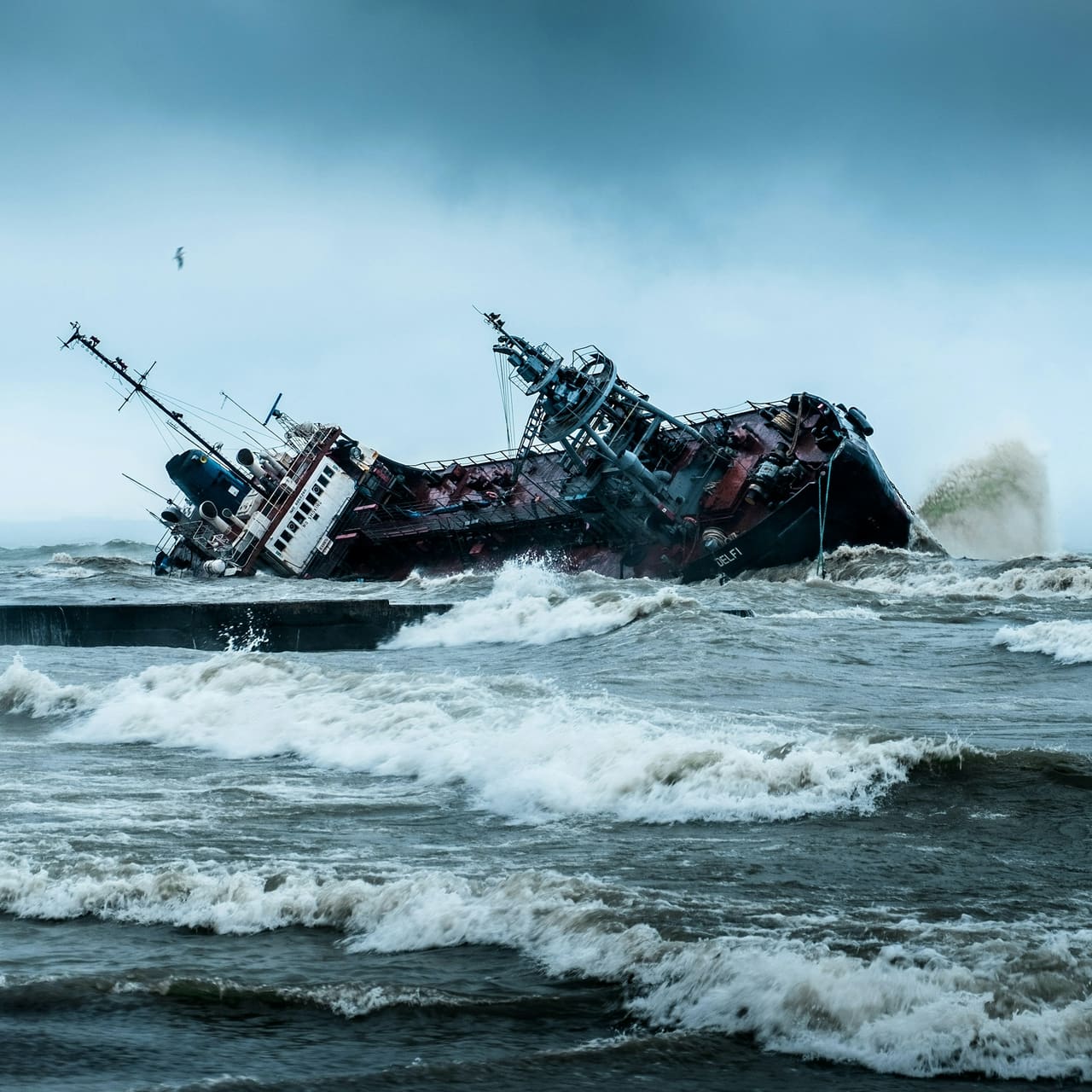
In the spring of 2026, shipping through the Strait of Hormuz largely came to a halt. Shortly afterwards, one of the world’s largest LNG exporters declared force majeure under individual long-term contracts.1 For many suppliers, that was the moment they read their force majeure clause properly for the first time since COVID-19.
Most of them found a pious wish. Because the decisive question in force majeure is not whether a war or a blockade is an extraordinary event. It almost always is. The decisive question is when the contract was concluded.
From optional extra to necessity
Force majeure and hardship were long treated as clauses for lawyers with time on their hands: nice to have, at the very back of the contract, right next to the forum-selection clause. That time is over. Pandemic, the war in Ukraine, sanctions, export controls on critical metals, the breakdown of entire information systems, blockades of shipping lanes. The list of events that can cut a supply chain overnight has grown longer in five years than in the twenty before.
The literature draws the same conclusion. Given the diffuse rules in the BGB, a well-made force majeure and hardship clause can do no harm, and one may lament that it appears necessary despite the statutory provisions.2 Vogenauer recommends regulating the matter contractually, for every contract that provides for a longer period between conclusion and performance, which means most international commercial sales.3
Nassim Taleb coined the term black swan for the kind of events at issue here: rare, consequential, and seemingly explicable in hindsight. The law knows the same problem under a soberer name. It calls it foreseeability, and it measures it at a single moment in time.
The pivot is the day of signature
German law barely knows the concept of force majeure. In the BGB it appears only in peripheral areas, such as the suspension of limitation periods under Section 206 BGB, in travel contract law and in the liability of innkeepers, and outside the BGB in Section 7(2) StVG (Road Traffic Act).4 For supply contracts, the general instruments remain: impossibility under Section 275 BGB and interference with the basis of the contract under Section 313 BGB. Where the parties have allocated the risk contractually, that allocation prevails.5
The case law has always defined force majeure narrowly:
The formula comes from strict liability and has become the benchmark well beyond it. The Federal Court of Justice traces it back to the Reichsgericht and, in doing so, moves the idea of the risk sphere to the front. Force majeure is an event coming from outside that cannot be averted even with the utmost care reasonably to be expected, and that belongs neither to the operational sphere of one side nor to the personal sphere of the other.7 For a supply contract, that is the more practical question. In whose sphere does the disruption fall?
The word everything hangs on is unforeseeable. And the yardstick is not the day of the disruption but the day of signature. The Strait of Hormuz shows this with uncomfortable clarity. As early as June 2025, the Iranian parliament had voted, albeit only in a recommending capacity, in favor of closing it.8 Anyone who concluded a contract for deliveries on that route afterwards must expect to be asked whether the blockade was genuinely unforeseeable for them. The same event is therefore force majeure under the older contract and possibly nothing more than a badly calculated risk under the newer one.
The Gulf region offers an old precedent for this. As far back as the first oil crisis, the Federal Court of Justice held that an oil trader had to reckon with warlike developments in the Middle East and the resulting price increases, and was therefore required to take timely measures to hedge its prices.9
There is a serious objection to this yardstick, and it belongs on the table. Reasoning backwards from a chronology known only later to what the parties should have known at the time invites hindsight bias. Hoffmann and Dishev therefore prefer a purely ex ante assessment, while the case law lets a latent risk situation suffice for foreseeability and asks what an averagely informed contracting party would have known.10
For drafting, that dispute is an open goal. If everything turns on the parties’ shared state of knowledge at the time of contracting, then write that state of knowledge down. Record which situation the parties treat as given at signature, what is expressly left open, and that later developments may still amount to force majeure or hardship.11 It costs one paragraph and takes the ground out of the later dispute.
What exactly is owed?
Before you turn to force majeure, settle the preliminary question that already disposes of many cases. Which obligation is actually affected, and has it perhaps already been performed?12
Under a C term of the Incoterms, the seller has delivered once it has concluded the contract of carriage and the carrier has taken over the goods. Whether the port of destination can still be reached after that is no longer the seller’s performance problem. In the case of a blocked strait, the delivery term therefore decides who has a problem at all. Which term shifts which risk is set out in the article “Incoterms® 2020: practical overview”.
The sub-supplier and the link in the chain nobody drafts
The most common misconception in practice is that the failure of a party’s own upstream supplier is force majeure for that party. The opposite is the rule.
Article 79(2) CISG and the ICC model clause treat the failure of a third party as a two-stage test. The supplier is excused only if force majeure exists both for the supplier itself and for the third party it engaged to perform.13 That third party is to be read narrowly. It acts independently and outside the control of the contracting parties, and there must be an organic link between it and the main contract.14 A party’s own supplier of raw materials or semi-finished goods regularly does not meet that test. Whether it falls under Article 79(2) CISG is an open question and can be left open, because its failure is already allocated through the seller’s procurement risk.15 The outcome stays the same; the reasoning gets cleaner.
| Situation | Requirement | Outcome | Reason |
|---|---|---|---|
| The contract manufacturer engaged fails because of an embargo that neither side could foresee at the time of contracting. | Force majeure exists for the third party as well; it was engaged to perform the main contract. | Excuse possible | Both stages of the test are satisfied. |
| The raw-materials supplier cannot deliver because prices have risen; the goods are available on the market, only at a higher price. | Procurement lies within the party’s own sphere of risk; obligation in kind. | No excuse | Whoever owes goods of a generic kind bears the procurement risk. |
The second case is the more frequent one in practice. In an unlimited obligation in kind, the debtor bears the procurement risk; unreasonableness under Section 275(2) BGB will regularly not be found.16 How far that reaches is shown by a decision of the Hamburg Court of Appeal. A seller of generic goods whose own supplier fails to deliver in breach of contract remains obliged to deliver as long as comparable substitute goods are available on the market, and a loss caused by a tripling of the market price was held bearable there.17 And a party that covers itself too late and therefore falls into default cannot invoke a crisis that would not yet have had any effect at the time timely procurement was due.18
The drafting answer to this risk is a self-supply proviso. A seller that agrees one effectively commits no breach of contract if it cannot perform because its own supplier has failed to supply it as agreed.19 Two qualifications come with it. First, in standard terms such a proviso is measured against Section 307 BGB, so its validity has to be tested case by case. Second, the other side responds in kind, with changed stockholding, consignment arrangements, or dual or multiple sourcing. Whoever demands the proviso should know that it opens the negotiation about inventory.
The allocation of scarce goods
A sub-topic almost every clause overlooks. What applies when the supplier can deliver, but not to everyone? May it choose whom to supply, and on what principle?
One qualification first. The question arises only where the supplier has taken on an obligation limited to its own stock or otherwise limited in kind under Section 243 BGB. A party owing an unlimited obligation in kind has to cover itself on the market; it has nothing to allocate.20
The answer is remarkably well defined, and it appears in none of the usual clauses:
| Situation | Basic rule | Limit |
|---|---|---|
| Stock is insufficient for all customers | Pro rata delivery to all creditors; impossibility applies to the outstanding remainder | Prevailing view |
| Commercial sale, delivery in order of receipt | Delivery in the order in which orders were placed is permitted | No license for arbitrary allocation; all customers must be treated reasonably |
| Supplier with market power | Selective supply only on objective grounds | Prohibitions on obstruction and discrimination, Section 19 GWB, Article 102 TFEU |
The prevailing view requires the debtor to supply all creditors pro rata, while impossibility applies to the outstanding remainder.21 This duty to apportion is no modern invention. The Reichsgericht derived it from Section 242 BGB as early as 1914: an exceptional drought had cut the harvest of a unique variety of sugar beet to roughly a fifth of the usual yield, the grower distributed what was left among his customers on a percentage basis, and one of them refused to accept that. The court sided with the grower; impossibility applied to the difference from the quantity promised.22 Pro rata delivery reaches its limit where partial performance is of no use to the customer. A manufacturer running just in time can do little more with a fifth of the quantity than with nothing at all, so whether a legitimate interest in partial performance remains has to be assessed case by case.23
Commercial usage additionally permits delivery in the order in which orders were placed but, as Hopt puts it, precisely no license for arbitrary allocation among customers, only a promise of reasonable treatment.24 From the customer’s perspective, however, that principle has a design flaw. At the time of contracting it does not know where it ranks, because it has no sight of its supplier’s other contracts; the right to information it will usually have at that point helps it only after the event.25
A party holding a dominant or relatively powerful market position must also observe the prohibition on discrimination in competition law.27 It calls for an objective and uniform standard. New customers may not be excluded from supply as a matter of course, while giving preference to long-standing customers may be justified. The duty extends only as far as existing capacity: the supplier need neither create new capacity nor buy in at higher prices.28 And even under the CISG the rule holds: a seller who has already received the goods from its own supplier may not withhold them and sell them at a higher profit to a second buyer.29
For the contract, a simple recommendation follows. Regulate allocation yourself instead of leaving it to a dispute. Set out whether delivery in a crisis is pro rata or by priority, and who ranks where.
Practice cases: what counts and what does not
Whether an event is force majeure is not decided by the label but on the facts. As orientation, drawn from my seminar practice:
| Event | Usually force majeure? | Why |
|---|---|---|
| War, armed conflict | Yes | The classic case, provided it was not on the horizon at the time of contracting |
| Embargo, sanction, export restriction | Rather yes / case by case | Sovereign act, provided it is unforeseeable, substantial, and external; critical where already announced |
| Pandemic, natural disaster | Yes | External, uncontrollable |
| Prolonged breakdown of information systems | Yes, with a caveat | In the ICC list since 2020; only where adequate preventive measures were in place |
| Power or IT failure inside your own business | Rather no | Regularly your own sphere of risk |
| Higher purchase prices, inflation | No | The debtor bears the price risk; hyperinflation is the exception |
| New or increased tariffs | No | They burden performance, they do not prevent it; a case for hardship and price adjustment |
| A missed or belated purchase | No | Not an external event but your own omission |
Two rows deserve a footnote in your head. For sovereign measures, the courts tend to reach for interference with the basis of the contract; official measures are nonetheless a possible case of force majeure in the view of the Federal Court of Justice, provided they are unforeseeable, substantial, and external.30 And on questions of monetary value, the nominal value principle puts the risk of currency depreciation on the creditor; force majeure becomes plausible only in hyperinflation, where fixed percentage thresholds are absent and monthly rates of at least 50 percent are sometimes cited.31
Tariffs are the instructive counter-case. For tariff increases and import restrictions, hardship clauses are regularly the relevant instrument; only specific export bans that make performance absolutely impossible are likely to qualify as force majeure.32 Anyone seeking protection against tariff exposure therefore needs no force majeure clause, but the right delivery term and a price adjustment; see the article “How to avoid U.S. tariffs as an international supplier”.
The case of blocked sea routes fits in here and shows at the same time what the test actually turns on. Not the label attached to the event, but four questions: is the specific event covered by the clause, is there a causal link to the specific supply disruption, what steps does the clause require, and were the notification duties observed?33
That is exactly where many pleas fail, on the evidence rather than on the doctrine. Complete documentation of the effects of the crisis is the precondition for enforcing claims later: price letters and communications from suppliers, evidence of additional costs measured against the original calculation, internal calculations, communications from forwarders, carriers, and insurers, and official orders.34 Of little help, by contrast, are the chamber of commerce certificates suppliers like to produce. They evidence only the underlying facts, not the consequences for the particular contract.35
The ICC model clause
Anyone unwilling to rely on a diffuse statute reaches for a tested template. The International Chamber of Commerce published two coordinated model clauses in 2020, one for force majeure and one for hardship.36 I contributed to their development as a member of the ICC Commission on Commercial Law and Practice. The force majeure clause (long form) defines the trigger as follows:
The clause is deliberately pitched below impossibility. It is enough that performance is impeded, not that it has become impossible. An official German version exists and works with its own settled terminology, which is the real practical value of the ICC template for a German-language contract.
The list of events in paragraph 3 is usually misunderstood. It is not a catalog of triggers but an instrument of proof. For the events listed there, only conditions (a) and (b) are presumed, and the other party bears the burden of proving the contrary. Condition (c), that the effects could not reasonably have been avoided or overcome, must always be proved by the affected party itself.37 From this follows a sobering insight for everyone who hopes to improve a clause by adding keywords. Adding new events to the list buys you little.
The list itself covers war and armed conflict, civil war, acts of terrorism, sabotage and piracy, currency and trade restrictions, embargo and sanction, acts of authority, plague and natural disaster, explosion and fire, the prolonged breakdown of transport, telecommunications, information systems, or energy, and labor disputes. What is notable is what was added in 2020: sanctions and trade restrictions, and the breakdown of information systems.38 The 2003 list knew neither.
On the remedies side, the clause regulates more than most users realize. It relieves the affected party of liability in damages and of any other contractual remedy, gives the other party the right to suspend its own performance, requires notice of the impediment and notice of its ending, imposes a duty to mitigate, opens a right to terminate, and provides for restitution of unjust enrichment in that case.39 The right to terminate operates in two stages. It applies where the disruption substantially deprives a party of what it was reasonably entitled to expect, and the clause supplements this with a period of 120 days that can expressly be varied.
The model clause is a good starting point, but not a self-starter. Test the list of events against your supply chain and delete or add what does not fit.
The notice that comes too late
This is where the most common practical mistake sits, and it has nothing to do with doctrine. The supplier invokes force majeure only once the customer claims damages for delay. By then it is too late.
Under the ICC clause, if notice is not given without delay, the relief takes effect only when the notice reaches the other party. The period before that stays with the debtor.40 The 2020 version separates the duty to notify from the legal consequences more carefully than the 2003 clause did, and ties those consequences to notice given without delay.41 Without an ICC clause, German law is not fundamentally different. Notice is an incumbency on the supplier, and where it is omitted or late, the supplier risks losing the temporary relief from performance.42
A second head of loss comes on top. A supplier that fails to inform its customer in time deprives it of the chance to arrange its own business and deliveries differently, and therefore exposes itself to claims under Sections 280(1) and 241(2) BGB.43
So draft the notice provision for real-world use: a clear deadline, a defined channel, a stipulation that notice by email is mandatory, and the duty to give notice when the impediment ends.44
Why the statute alone is not enough
At this point it becomes clear why a dedicated clause achieves more than the CISG. Article 79(5) CISG relieves the debtor of damages only. All other remedies of the creditor, namely performance, price reduction, and avoidance of the contract, remain fully available. The creditor therefore decides how the situation is handled, while the debtor stays bound to the contract and cannot resolve the situation unilaterally.45
That is exactly where the ICC clause steps in. It expressly relieves the affected party of any other contractual remedy as well and thereby compares favorably with Article 79 CISG, whose paragraph 5 Vogenauer describes as a legislative misfire.46 Anyone relying on the statute alone in an international sale of goods is therefore not free of the obligation to perform, only free of liability. That is a difference you cannot renegotiate once the crisis has arrived.
The same clause, three legal systems
Why the choice of law comes first becomes apparent once you copy the same clause into different legal systems. It no longer means the same thing.
Chinese courts tend to read force majeure clauses broadly. Courts in New York take the opposite route. Absent a catch-all provision, only the events expressly listed can excuse performance, and the party must additionally show that there is no alternative means of performing the contract. Californian law requires proof of sufficient or reasonable efforts, such as insurance cover or procurement from other providers.47
Under English law, every force majeure and hardship clause is subject to the maxim that exceptions are construed narrowly, and contra proferentem applies even to individually negotiated commercial contracts.48 Three examples make that tangible. In the London riots of 2011 the clause expressly named riot and civil commotion, yet relief was refused because the risk of burglary and fire was foreseeable and the operators had taken no adequate protective measures. On the wording preventing or hindering, the House of Lords held that a doubling of the procurement price was not enough and that economic impossibility was a dangerous proposition. And without a clause there is no statutory fallback but the narrower doctrine of frustration.49
The sharpest formulation comes from the Israeli Supreme Court. A war in Israel is not an unforeseeable event, because the country is exposed to a constant security threat.50 That is the thesis of this article in its hardest form. Foreseeability is tied to place.
Two practical consequences follow. Against narrow construction under the ejusdem generis rule, wordings such as including but not limited to, whether or not similar to the foregoing, and without prejudice to the foregoing help.51 And under English law, do not rely on a bare duty to negotiate. An agreement to agree is void for uncertainty, and a duty to negotiate in good faith is likewise generally unenforceable for uncertainty unless a detailed negotiation mechanism with objective criteria has been agreed.52
What happens if the clause is invalid?
That leaves the uncomfortable point serious advice does not conceal. Under German standard-terms law, the validity of such clauses is contested.
Vogenauer considers them unobjectionable in principle. Section 313 BGB is mandatory, he notes, but the detailed shaping of the risk allocation is left to the parties; relevant clauses are generally recognized by German courts and take precedence over Section 313 BGB, in particular where they merely extend or specify its scope.53
Graf von Westphalen takes a stricter view and calls the typical supplier clause a Pandora’s box under standard-terms law. His objection is more precise than it is usually reported. The clause mixes two standards of care, the utmost care of force majeure and the required care under Section 276(2) BGB in the catch-all provision, and becomes intransparent in doing so.54 Because content review proceeds on the construction least favorable to the user, the strictest standard then applies throughout. And that standard draws the sub-supplier into the supplier’s duties of prevention, although under German default law it is precisely not a vicarious agent within the meaning of Section 278 BGB.55 The clause can therefore leave its user worse off.
I do not need to resolve that dispute for practice. My conclusion runs differently:
That is not an invitation to sloppiness but the opposite, a deliberate decision. Westphalen too concedes that falling back on the default statutory regime is not all that negative in its effects, but rather quite manageable, and regards only the catch-all provision as severable.56 That is exactly where the room for maneuver lies. And what the clause cannot contract away remains available to you in any event: the right to terminate for cause under Section 314 BGB and the rights to withhold performance under Sections 320 and 273 BGB, which in a crisis are often the stronger bargaining tool.57
The checklist
Force majeure cannot be negotiated away, but it can be prepared for. Ten steps, in this order:
The difference between a clause that reassures and a clause that holds is not its length. It is whether somebody asked these ten questions before the black swan turned up.
Frequently asked questions
What does force majeure mean?
An external, extraordinary event that prevents performance, was not foreseeable at the time of contracting, and whose effects cannot be averted by reasonable means. War, embargo, natural disaster, or pandemic are typical cases; higher prices or a missed purchase are not.
Does German law recognize force majeure?
Barely. The BGB addresses force majeure only in peripheral areas, such as the suspension of limitation periods under Section 206 BGB or the law of travel and innkeepers. For supply contracts, the general instruments apply: impossibility under Section 275 BGB and interference with the basis of the contract under Section 313 BGB. That is precisely why a dedicated clause pays off, one that defines the trigger and the consequences more clearly than the statute does.
Which moment governs foreseeability?
The time of contracting. A party that concludes a contract although a conflict or a sanction was already on the horizon cannot later invoke force majeure. The same event can therefore be force majeure under one contract and not under another, depending on when it was signed.
Does the failure of a sub-supplier excuse performance?
Only under narrow conditions. Under Article 79(2) CISG and the ICC model clause, force majeure must exist both for the supplier itself and for the third party engaged. A party’s own raw-materials supplier is regularly not such a third party at all: its failure already falls within that party’s own procurement risk and therefore does not excuse performance.
What happens if I give notice of force majeure too late?
You lose the relief for the past. Under the ICC model clause, late notice means the relief takes effect only when the notice reaches the other party; for the period before that, liability remains. A party that also deprives its customer of the chance to source elsewhere exposes itself to damages on top.
May a supplier allocate scarce goods among its customers as it sees fit?
No. If stock is insufficient for everyone, the prevailing view requires pro rata delivery to all customers; commercial usage also permits delivery in the order in which orders were placed. Arbitrary or discriminatory allocation is not permitted and, where market power exists, may breach competition law.
Notes
-
Frank-Fahle/Trost, Globale Krisen als Stresstest für internationale Lieferketten, RIW 2026, 326 (326). Additionally the reporting: Al Jazeera, QatarEnergy declares force majeure on some LNG contracts due to Iran war, 24 March 2026, https://www.aljazeera.com/news/2026/3/24/qatarenergy-declares-force-majeure-on-some-lng-contracts. The exact scope (individual long-term contracts, including customers in Italy, Belgium, South Korea, and China) is taken from press reports, as of July 2026. ↩
-
Rothermel, Ereignisse und höhere Gewalt, Unmöglichkeit, Wegfall der Geschäftsgrundlage, Hardship, Frustration im BGB und in anderen Rechtsordnungen – braucht es eine Klausel?, IHR 2020, 89 (95). ↩
-
Vogenauer, Hardship clauses und verwandte Klauseln in internationalen Handelskäufen, IWRZ 2021, 209 (214), and parts I to V, IWRZ 2021, 3, 57, 112, 147, 209. ↩
-
Rothermel, IHR 2020, 89 (89 f.). ↩
-
Rothermel, IHR 2020, 89 (90, 91); on the precedence rule Vogenauer, IWRZ 2021, 209 (210). ↩
-
BGH, judgment of 30 May 1974 – III ZR 190/71, on force majeure within strict liability under Section 22(2) sentence 2 WHG (Federal Water Act); the omission covers the words “auch hier”. ↩
-
BGH, judgment of 16 May 2017 – X ZR 142/15, marginal no. 8 (on Section 651j BGB, former version), referring to RGZ 101, 94 (95); RGZ 117, 12 (13); BGH, judgment of 12 March 1987 – VII ZR 172/86. An administrative error that prevents a traveler from starting a trip falls within the traveler’s risk sphere and is not force majeure. ↩
-
See Newsweek and CNBC, 22/23 June 2025 (resolution of the Iranian parliament to close the Strait of Hormuz, recommending only; the final decision rests with the Supreme National Security Council). Press reports as of July 2026. ↩
-
Federal Court of Justice on the first oil crisis, reported in Frank-Fahle/Trost, RIW 2026, 326 (329). ↩
-
Hoffmann/Dishev, Ukraine-Krieg, EU-Sanktionen und Inflation als Act of God / Force Majeure / Höhere Gewalt?, NJOZ 2022, 1473 (1474 f.). ↩
-
Unseld/Edel/Schnell/Russen/Watts, Dynamic Tariffs: Risks and Challenges for Commercial Contracts, TLJ 2026, 25 (27). ↩
-
Piltz, “Force Majeure” in Zeiten von Corona – Lösungen des internationalen Wirtschaftsrechts, gtai 2020, pp. 4 f.; Articles 71 CISG (right to withhold performance) and 80 CISG (creditor’s own causation) are also to be examined first. ↩
-
Article 79(2) CISG; ICC Force Majeure Clause 2020 (Long Form), para. 2; see Vogenauer, IWRZ 2021, 112 (114). ↩
-
Kiraz, COVID-19 and Force Majeure Clauses, Unif. L. Rev. 2020, 1 (27). ↩
-
Graf von Westphalen, Höhere Gewalt-Klauseln: AGB-rechtliche Pandora-Büchse in der Pandemie, ZVertriebsR 2020, 275 (278); Piltz, gtai 2020, p. 4; Hoffmann/Dishev, NJOZ 2022, 1473 (1474); on the supplier’s own sphere of risk see also Philippe, Article 79 CISG, hardship, risk and renegotiation, No. 2. ↩
-
Armbrüster/Prill, JuS 2020, 1008 (1011); likewise Rothermel, IHR 2020, 89 (91) and Hoffmann/Dishev, NJOZ 2022, 1473 (1474) on the procurement risk under Section 243(1) BGB. ↩
-
Hamburg Court of Appeal, IHR 2020, 170, reported in Piltz, gtai 2020, p. 4. ↩
-
Mann/Baisch/Schenn, ZVertriebsR 2020, 211 (219 f.). ↩
-
Piltz, gtai 2020, p. 5; on testing validity case by case Beyer, COVID-19 als Force Majeure, 2020, p. 3. ↩
-
Baier/Krüger, Einkauf in der Krise, ZVertriebsR 2024, 343 (346). ↩
-
Weller/Lieberknecht/Habrich, Auswirkungen der Corona-Krise auf die Vertragsdurchführung, NJW 2020, 1017 (1019). ↩
-
Reichsgericht, judgment of 3 February 1914, RGZ 84, 125, as reported by Baier/Krüger, ZVertriebsR 2024, 343 (347). ↩
-
Baier/Krüger, ZVertriebsR 2024, 343 (347), referring to Section 266 BGB and the values underlying Sections 323(5), 281(1) sentence 2 BGB. ↩
-
Baumbach/Hopt, HGB, Section 346 marginal no. 1 et seq. (keyword Liefermöglichkeit); RGZ 103, 116; on self-supply clauses BGH, judgment of 14 November 1984 – VIII ZR 283/83. ↩
-
Baier/Krüger, ZVertriebsR 2024, 343 (347). ↩
-
Baier/Krüger, ZVertriebsR 2024, 343 (346). ↩
-
Section 19(1), (2) no. 1 GWB, Article 102 TFEU; see Lange, Lieferstopps, Risiken und Abwehrstrategien, 2025, marginal no. 12. ↩
-
Baier/Krüger, ZVertriebsR 2024, 343 (347), on Section 19(2) no. 1 GWB. ↩
-
CISG Advisory Council, Opinion No. 20, Hardship under the CISG, 2020, para. 7.14. ↩
-
Rothermel, IHR 2020, 89 (94), referring to BGH, judgment of 8 February 1984 – VIII ZR 254/82 (import bans) and OLG Frankfurt am Main, judgment of 16 September 2004 – 16 U 49/04. ↩
-
Hoffmann/Dishev, NJOZ 2022, 1473 (1475 f.). ↩
-
Rothermel, IHR 2020, 89 (94). On the distinction see also Unseld/Edel/Schnell/Russen/Watts, TLJ 2026, 25 (26): force majeure suspends or excuses performance, hardship captures the economic consequences and leads to adjustment. ↩
-
Frank-Fahle/Trost, RIW 2026, 326 (328). ↩
-
Frank-Fahle/Trost, RIW 2026, 326 (329 f.). ↩
-
Hoffmann/Dishev, NJOZ 2022, 1473 (1474), on the Russia-Ukraine certificates issued by German chambers of industry and commerce; on the certificate of the China Council for the Promotion of International Trade see Weaver, Störung der Lieferkette durch Covid-19 – Force Majeure? Es kommt darauf an!, ZVertriebsR 2020, 159 (160). ↩
-
ICC Force Majeure Clause 2020 (Long Form), para. 1, ICC, March 2020. The omissions cover the defined terms “Force Majeure Event” and “the Affected Party”. A shorter short form and an official German version are available. ↩
-
ICC Force Majeure Clause 2020 (Long Form), para. 3 and commentary; German version para. 3; Vogenauer, IWRZ 2021, 112 (114); on the burden of proof resting with the invoking party Weaver, ZVertriebsR 2020, 159 (161). ↩
-
Vogenauer, IWRZ 2021, 112 (114). ↩
-
ICC Force Majeure Clause 2020 (Long Form), paras. 4 to 6, 8, and 9; Vogenauer, IWRZ 2021, 112 (115). On the practice of settling performance already rendered pro rata or by lump sum see Weaver, ZVertriebsR 2020, 159 (160). ↩
-
ICC Force Majeure Clause 2020 (Long Form), para. 5: “If notice thereof is not given without delay, the relief is effective from the time at which notice thereof reaches the other party.” ↩
-
Vogenauer, IWRZ 2021, 112 (114 f.). ↩
-
Weaver, ZVertriebsR 2020, 159 (160); on mitigation ibid., which follows in German law from Section 254(2) sentence 1 BGB even without an express clause. ↩
-
Beyer, COVID-19 als Force Majeure, 2020, pp. 3 f. ↩
-
On mandatory notice by email see Vogenauer, IWRZ 2021, 209 (215); on notice of the impediment ending see ICC Force Majeure Clause 2020 (Long Form), para. 6. ↩
-
Piltz, gtai 2020, p. 4. ↩
-
Vogenauer, IWRZ 2021, 112 (115); ICC Force Majeure Clause 2020 (Long Form), para. 5. ↩
-
Weaver, ZVertriebsR 2020, 159 (160 f.). ↩
-
Vogenauer, IWRZ 2021, 209 (212 f.). ↩
-
Vogenauer, IWRZ 2021, 209 (212 f.); on the doctrine of frustration Frank-Fahle/Trost, RIW 2026, 326 (328) and Smith et al., COVID-19: force majeure, frustration and illegality in English law, Practical Law UK 2020 (Practice Note). ↩
-
Reported in Vogenauer, IWRZ 2021, 209 (212). ↩
-
Vogenauer, IWRZ 2021, 209 (213 f.). ↩
-
Vogenauer, IWRZ 2021, 209 (211 f.). ↩
-
Vogenauer, IWRZ 2021, 209 (210, 214). ↩
-
Graf von Westphalen, ZVertriebsR 2020, 275 (277 f., 279). ↩
-
Graf von Westphalen, ZVertriebsR 2020, 275 (278 f.). ↩
-
Graf von Westphalen, ZVertriebsR 2020, 275 (280, 280 f.). ↩
-
Frank-Fahle/Trost, RIW 2026, 326 (328 f.). ↩
Reference: Poleacov, P. (2026). Why most force majeure clauses fail. INN.LAW. https://inn.law/en/perspectives/force-majeure/